Showing posts with label back to basics. Show all posts

Friday, 1 December 2017

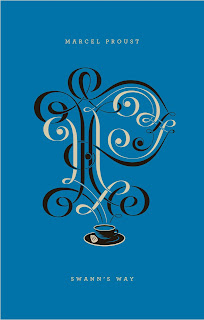
Swann’s Way

November 2017


OK then. Yes. What to say about this, apart from that the very act of reading it is something of an exercise in eating my own words?

Monday, 20 February 2017

Babel-17

(February 2017)


Working my way through the canon. Slim book, fat (if not entirely watertight) ideas. Thinking of collating a Linguistics in SF list. There’s this, Embassytown, Snow Crash, and of course 1984. Any other ideas?

Saturday, 12 March 2016

A Tale of Two Cities

(March 2016)


I enjoyed this immensely, and am still rather surprised by that. Nothing like a bit of overwrought Victorian melodrama to stir the blood.

Wednesday, 10 February 2016

The Death and Life of Great American Cities

(February 2016)


We’re going to kick off Arbitrary Theme Month with a couple of foundation texts, the cover blurb of the first of which informs us that it is “perhaps the single most influential work in the history of town planning.” Now, I realize that on first reading this sounds a little like being the most famous Belgian, but that in itself is a measure of how little thought we (still) seem to give one of the most important fields of human organization.

Monday, 18 January 2016

A Room of One’s Own / We Should All Be Feminists

(December 2015)
(January 2016)


I read these and they were good and I sadly have very little to say about them that hasn’t been said many, many times already. If I had the inclination, knowledge, or talent I’d offer some thoughts on the differences and similarities between the two, and what that tells us about the progression of gender (and indeed racial) politics over the last century, but I regret that I find myself falling short on all counts. Nonetheless, both are clearly necessary, if in markedly different ways.

Monday, 31 August 2015

The Secret Agent

Joseph Conrad, 1907
(August 2015)


A slightly bizarre reading experience, this. While continuing the slow migration of my library from the UK to Japan (i.e. going through boxes of books in Mum's loft) I found an old copy of this with a bookmark wedged about forty pages from the end.

Thursday, 27 August 2015

Starship Troopers

(July 2015)


So now I’ve read some Heinlein. A handbook of military etiquette leavened only by some tedious and dubious civics lessons. Disappointed Grandpa Lecture in its purest, most literal form.
  

Thursday, 20 August 2015

Things Fall Apart

(July 2015)


"Shakespearian tragedy" it says here in what passes for my notes. Clearly deserves something more substantial and less glib, but I'm equally unable to provide that right now. Not exactly beach read material, but obviously so, so much more.

Monday, 13 July 2015

The King's English

(July 2015)


A style guide, basically. And as with any reasonably well constructed style guide it contain equal parts sage regard for the essential mutability of language and random prescriptivism, particularly on the subject of pronunciation.

Sunday, 23 November 2014

We Have Always Lived in the Castle

(November 2014)


Now this is how you do narrative tension and an unreliable narrator. Terrifyingly fantastic.

Friday, 6 June 2014

Jane Eyre & Wide Sargasso Sea

(May 2014)


Get me with the classics, such as they are. We’ve been watching clips from the BBC adaptation of Jane Eyre in class, and after banging on about how it’s the English equivalent of Kokoro (in so much as it’s often studied in school) I figured I may as well read the damn thing properly.

Wednesday, 9 October 2013

The Art of Rhetoric

(October 2013)

The purpose, then, of democracy is freedom, that of oligarchy is wealth, that of aristocracy has to do with education and customs, and that of tyranny is security.


Friday, 6 September 2013

Zen and the Art of Motorcycle Maintenance

Robert M. Pirsig, 1974
(September 2013)


One of things I find myself doing, as a result of blogging about every book I read, is picking out quotations I think I could use here. It’s not obsessive, but every so often something will jump out at me as illustrative, or just interesting, and I’ll put it in the final post. After about five pages of Zen… I noticed one. Then after a few more pages another presented itself, then after a few more pages another, and another, and another.

Quite a quotable book then, and definitely relevant to our (by which I mean my) areas of interest. But there are just too many of the damn things. It’s packed too tight to unwrap in a single blogpost and the connections to other stuff I think and have thought shoot out like a web spun by a spider on speed. So I’m not going to quote anything from the book at all. No. I’m going to quote Donald Rumsfeld instead.
Wednesday, 12 June 2013

Information Theory

John R. Pierce, 1980 [1961]

Claude E. Shannon and Warren Weaver, 1949 [1998]
(June 2013)


One of these books is a very dense, technical work, heavy on the jargon and academic prose and littered with equations and diagrams that are very difficult for the layperson to get their head around. And the other is worse.

Friday, 29 March 2013

The Trial

Franz Kafka, 1925 [Idris Parry, 1994]
(March 2013)


When we moved out of our last apartment the landlord sent round an agent to give the place a once over before we got the deposit back. We’d had an unexpectedly good relationship and it was relatively painless. I’d geed myself up for a bit of an argument, so the fact that he didn’t even try to gouge us on the price for a new set of tatami mats was almost a disappointment. He did, though, charge us for a new internal door and sadly I could have no complaints about that.
  

Friday, 15 February 2013

The Island of Doctor Moreau

H.G. Wells, 1896
(January 2013)


I could probably compose this post almost entirely from fragments of stuff I’ve already written about other books. Let’s see, what exactly do we have here?

Monday, 29 October 2012

Orientalism

Edward W. Said, 1978
(October 2012)


There’s a type of person. A certain type of person. You know who I mean, the type that’s heard about ‘books furnishing a room’ and taken that to mean that books are more important for what they look like and what signals having them is supposed to send out than the words and ideas they contain. Wankers, in other words.